Introduction to Mobile SEO
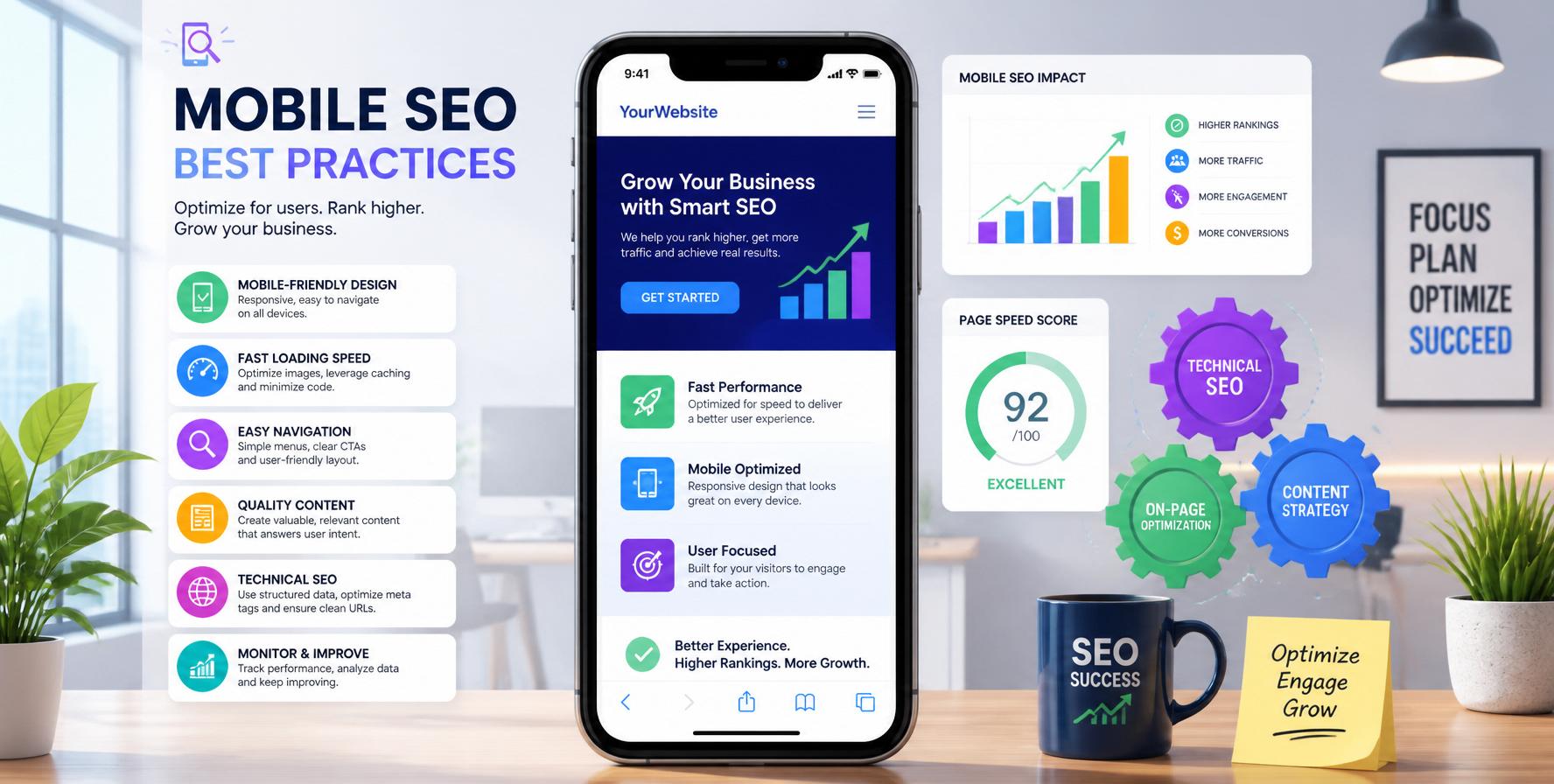
Mobile Search Engine Optimization (Mobile SEO) encompasses the strategic process of optimizing websites to deliver exceptional performance and visibility on mobile devices. With over 60% of global search queries originating from smartphones and tablets, mobile optimization has transitioned from a competitive advantage to a fundamental requirement for digital success.
Google's mobile-first indexing paradigm fundamentally altered the SEO landscape by prioritizing the mobile version of websites for crawling, indexing, and ranking. Consequently, if your mobile site underperforms in terms of speed, usability, or content parity, your search visibility across all devices will be adversely impacted.
Strategic Insight: Mobile SEO transcends mere "mobile-friendliness" — it demands an exceptional mobile user experience that simultaneously satisfies user expectations and search engine requirements. In 2026, mobile optimization constitutes a non-negotiable pillar of holistic SEO strategy.
Understanding Mobile-First Indexing
Mobile-first indexing represents Google's methodology of utilizing the mobile version of a website for indexing and ranking purposes. Since its full rollout in 2021, this approach has become the default for all new and existing websites. Key considerations include:
- Mobile-First Crawling Priority: Googlebot predominantly crawls the mobile version of your site, treating it as the primary source for ranking signals and content.
- Content and Metadata Parity: Your mobile site must maintain consistent content, meta tags, title tags, and structured data with your desktop version.
- Indexing Implications: Mobile-specific issues — such as missing content, broken elements, or poor performance — directly impact your overall search rankings.
- Recommended Implementation: Responsive design remains Google's recommended configuration, ensuring a single URL serves all devices with adaptive content.
To verify your site's mobile-first indexing status, utilize the URL Inspection tool within Google Search Console, which provides detailed insights into how Google perceives your mobile pages.

Responsive Web Design Fundamentals
Responsive web design constitutes the industry-standard approach for mobile SEO implementation. By leveraging CSS media queries, responsive design dynamically adapts your site's layout, typography, and functionality based on the user's device characteristics. The advantages are substantial:
- Unified URL Architecture: A single URL serves both desktop and mobile users, simplifying crawlability and indexation for search engines.
- Duplicate Content Elimination: Unlike separate mobile subdomains (m.example.com), responsive design prevents duplicate content complications.
- Reduced Maintenance Overhead: A consolidated codebase minimizes maintenance complexity and accelerates update deployment.
- Superior User Experience: Content seamlessly reflows across all screen dimensions, ensuring consistent accessibility.
For sites employing separate mobile URLs, implement rel="canonical" and rel="alternate" tags meticulously to communicate the relationship between versions and prevent indexing issues.
Mobile Page Speed Optimization
Page speed constitutes a critical ranking factor for mobile search, with Google's Core Web Vitals serving as the primary measurement framework. Mobile users exhibit limited patience for slow-loading pages, and Google rewards fast, responsive experiences. Implementation strategies include:
1. Optimize Media Assets for Mobile Delivery
- Adopt modern image formats — WebP and AVIF — which provide superior compression and quality characteristics.
- Implement lazy loading for images and iframes positioned below the viewport.
- Utilize srcset attributes to serve resolution-appropriate images across devices.
- Employ compression tools like ImageOptim or TinyPNG to reduce file sizes without perceptible quality degradation.
2. Minimize Render-Blocking Resources
- Audit and eliminate unused CSS and JavaScript using Chrome DevTools Coverage.
- Implement code splitting to load only critical resources for each page.
- Apply
asyncanddeferattributes to non-critical scripts. - Minify CSS, JavaScript, and HTML to reduce payload sizes.
3. Leverage CDN and Caching Infrastructure
- A Content Delivery Network (CDN) reduces latency by serving assets from geographically distributed edge locations.
- Implement browser caching to store static assets locally on user devices.
- Deploy server-side caching solutions (Varnish, Redis) to accelerate dynamic content delivery.
4. Optimize Server Response Times (TTFB)
- Upgrade to high-performance hosting infrastructure (dedicated or cloud-based).
- Utilize a fast DNS provider to minimize resolution latency.
- Optimize database queries and reduce unnecessary server-side processing.
Performance Tip: Leverage Google PageSpeed Insights to conduct comprehensive mobile speed assessments. The tool delivers specific, actionable recommendations tailored to your site's unique performance bottlenecks.
Mobile User Experience Best Practices
User experience (UX) serves as a foundational component of Mobile SEO. Optimizing UX signals directly impacts engagement metrics, which in turn influence search rankings. Essential UX optimizations include:
- Typography Optimization: Maintain body text at a minimum of 16px to eliminate the need for zooming.
- Touch Target Sizing: Ensure interactive elements meet a minimum of 44px × 44px for optimal tapping precision.
- Strategic Spacing: Provide adequate spacing between interactive elements to prevent accidental activation.
- Pop-up Management: Eliminate intrusive interstitials that obscure content — Google actively penalizes such implementations on mobile.
- Navigation Simplification: Implement hamburger menus or bottom navigation for intuitive access.
- Mobile-Optimized Forms: Utilize specialized input types (
tel,email) to trigger appropriate on-screen keyboards. - Viewport Configuration: Ensure proper viewport settings:
<meta name="viewport" content="width=device-width, initial-scale=1.0">.
AMP and Progressive Web Apps
AMP (Accelerated Mobile Pages) and PWAs (Progressive Web Apps) represent advanced technologies that can significantly enhance mobile performance and user engagement:
AMP (Accelerated Mobile Pages)
AMP is an open-source framework engineered for near-instantaneous mobile page loading. While AMP pages deliver exceptional speed through simplified HTML and restricted JavaScript, their importance has diminished as the broader web ecosystem has embraced performance optimization. AMP remains valuable for news publishers and content-heavy sites requiring immediate load times.
Progressive Web Apps (PWAs)
PWAs bridge the gap between web and native applications, offering native-app-like experiences through web technologies. Key capabilities include:
- Offline Functionality: Service workers enable content caching for offline access.
- Push Notifications: Re-engage users with timely updates and alerts.
- Home Screen Installation: Users can add PWAs to their device home screens for app-like accessibility.
- Performance Optimization: Caching strategies ensure rapid loading across network conditions.
While PWAs do not directly function as ranking factors, they substantially improve user experience metrics and engagement, which indirectly contribute to SEO performance.
Comprehensive Mobile SEO Checklist
Utilize this Mobile SEO Checklist to systematically audit and optimize your site's mobile presence:
Essential Mobile SEO Tools
Employ these industry-standard tools to comprehensively monitor and enhance your mobile SEO performance:
| Tool | Primary Purpose | Ideal Application |
|---|---|---|
| Google PageSpeed Insights | Mobile performance assessment | Performance scoring and optimization recommendations |
| Google Search Console (Mobile Usability) | Mobile UX issue detection | Identifying and resolving mobile-specific errors |
| Mobile-Friendly Test | Compatibility verification | Rapid mobile-friendliness assessments |
| Lighthouse (Chrome DevTools) | Performance auditing | Comprehensive performance and UX diagnostics |
| Screaming Frog SEO Spider | Site-wide crawling | Verifying mobile content parity and structured data |
| Google Analytics (Mobile Reports) | User behavior analysis | Understanding mobile user engagement and conversion patterns |
Frequently Asked Questions About Mobile SEO
Addressing the most common inquiries regarding Mobile SEO and mobile optimization strategies.
Mobile SEO encompasses the optimization of websites for mobile devices to achieve higher search rankings. Its importance stems from Google's mobile-first indexing and the dominance of mobile search traffic, which collectively make mobile optimization essential for visibility and traffic acquisition.
Mobile-first indexing refers to Google's practice of using the mobile version of a website for indexing and ranking purposes. This means the mobile site serves as the primary source for content evaluation, metadata extraction, and ranking signal derivation.
Implement responsive web design, configure your viewport meta tag, maintain readable font sizes, ensure touch-optimized buttons, and optimize page speed. Validate your implementation using Google's Mobile-Friendly Test tool.
Optimal mobile page speed is defined by LCP ≤ 2.5 seconds, FID ≤ 100 milliseconds, and CLS ≤ 0.1. Additionally, pages should achieve full load in under 3 seconds to maintain user engagement and avoid abandonment.
Yes, Google actively penalizes websites utilizing intrusive interstitials that obstruct content on mobile devices. Such implementations can negatively impact mobile search rankings and user experience metrics.
Utilize Google Search Console's Mobile Usability report, the Mobile-Friendly Test tool, or Lighthouse within Chrome DevTools. Each provides comprehensive diagnostics and actionable recommendations for resolving mobile usability issues.
AMP (Accelerated Mobile Pages) is a lightweight HTML framework designed for fast content delivery, primarily used for articles and news. PWA (Progressive Web App) provides native-app-like experiences with offline capabilities, push notifications, and home screen installation. Both enhance mobile performance but serve different use cases.
Ready to Master Mobile SEO?
Explore our comprehensive collection of Technical SEO, Mobile, and Performance guides to optimize your website for sustainable growth.
Access All Technical SEO Guides →