What Is Search Intent?
Search intent — also called user intent or query intent — is the underlying goal a person has when they type a query into Google. Every search, no matter how simple or complex, is driven by a specific need. Someone searching "how to bake a cake" wants instructions. Someone searching "buy chocolate cake near me" wants to make a purchase. The words are different because the intentions are different.
Google has invested billions of dollars and decades of research into understanding search intent better than any other company on earth. Its algorithms do not just match keywords to web pages — they interpret what users actually mean and deliver results that satisfy that meaning. For website owners and content creators, aligning with search intent is no longer optional. It is the foundation upon which all successful SEO strategies are built.
When your content matches search intent perfectly, several positive things happen: users spend more time on your page, bounce rates decrease, social shares increase, and most importantly — Google rewards you with higher rankings. When your content fails to match intent, the opposite occurs. Users click back to search results within seconds (a behavior called pogo-sticking), signaling to Google that your page did not satisfy the query, and your rankings decline.
User wants to learn something
User wants to find a specific website
User wants to research before buying
User is ready to purchase
Key insight: Google's Quality Rater Guidelines — the document used by human evaluators to assess search quality — heavily emphasize search intent. Pages are rated based on how well they satisfy user needs. This means intent matching is not just an algorithmic factor; it is baked into Google's fundamental understanding of quality.
The 4 Types of Search Intent — Complete Breakdown
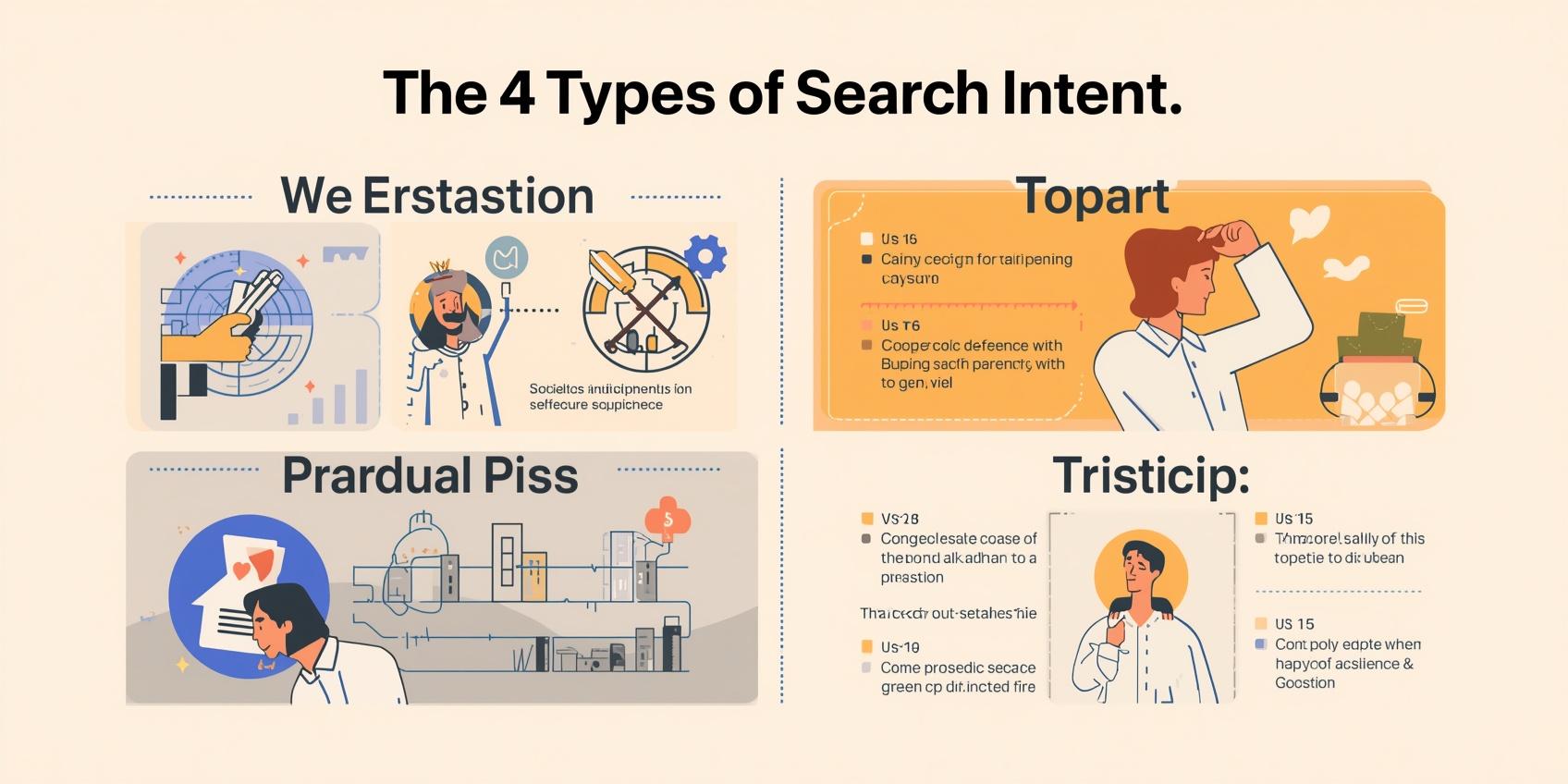
SEO experts generally categorize search intent into four distinct types. Understanding each one — and knowing which applies to your target keywords — is essential for creating content that ranks. Let us examine each type in detail with real-world examples.
1. Informational Intent — "I Want to Know"
Informational queries are the most common type of search. The user wants to learn something, understand a concept, find an answer, or solve a problem. These searches often contain question words and account for the vast majority of blog traffic.
Common keyword patterns: how to, what is, why does, when did, where can, who is, guide, tutorial, tips, ideas, examples, meaning, definition.
Real examples: "how to tie a tie," "what is blockchain technology," "why is the sky blue," "best way to lose weight," "beginners guide to photography."
Content that satisfies this intent: Blog posts, how-to guides, tutorials, explainer articles, infographics, educational videos, and FAQ pages. The key is to provide clear, comprehensive, and accurate information without pushing for a sale — the user is not ready to buy yet.
2. Navigational Intent — "I Want to Go"
Navigational queries occur when a user wants to reach a specific website or webpage. They already know their destination; they are simply using Google as a navigation tool rather than typing the full URL into the address bar.
Common keyword patterns: Brand names, product names, login, homepage, app, official website.
Real examples: "facebook login," "youtube," "amazon prime," "gmail inbox," "rankqi blog," "twitter help center."
Content that satisfies this intent: Your homepage, landing pages, login pages, and branded content. For navigational queries related to your own brand, ensure your site appears at the top of results. For navigational queries related to other brands, it is extremely difficult to rank because the user wants a specific destination — not your alternative.
3. Commercial Intent — "I Want to Research"
Commercial investigation queries sit between informational and transactional intent. The user is considering a purchase but wants to compare options, read reviews, and evaluate alternatives before committing. These are high-value keywords because they target users close to making a buying decision.
Common keyword patterns: best, top, review, comparison, vs, versus, alternatives, pros and cons, features, pricing, worth it, affordable, cheap.
Real examples: "best laptops 2026," "iPhone vs Samsung," "SEMrush review," "Bluehost pricing," "best SEO tools for beginners," "Netflix vs Amazon Prime."
Content that satisfies this intent: Comparison articles, product reviews, buyer's guides, "best of" lists, feature breakdowns, and pricing comparison pages. These pages should be honest, detailed, and helpful — pushing too hard for a specific product can feel biased and drive users away.
4. Transactional Intent — "I Want to Buy"
Transactional queries signal the highest level of purchase readiness. The user has completed their research and is ready to take action — whether that means buying a product, signing up for a service, downloading software, or booking an appointment.
Common keyword patterns: buy, purchase, order, shop, price, discount, coupon, deal, sale, free shipping, near me, sign up, subscribe, download.
Real examples: "buy iPhone 16 online," "cheap flights to Dubai," "pizza delivery near me," "SEMrush discount code," "download Windows 11," "Netflix sign up."
Content that satisfies this intent: Product pages, pricing pages, checkout pages, sign-up forms, and service booking pages. These pages should make the transaction as frictionless as possible — clear calls to action, minimal distractions, and fast loading speeds are essential.
How to Identify Search Intent for Any Keyword?
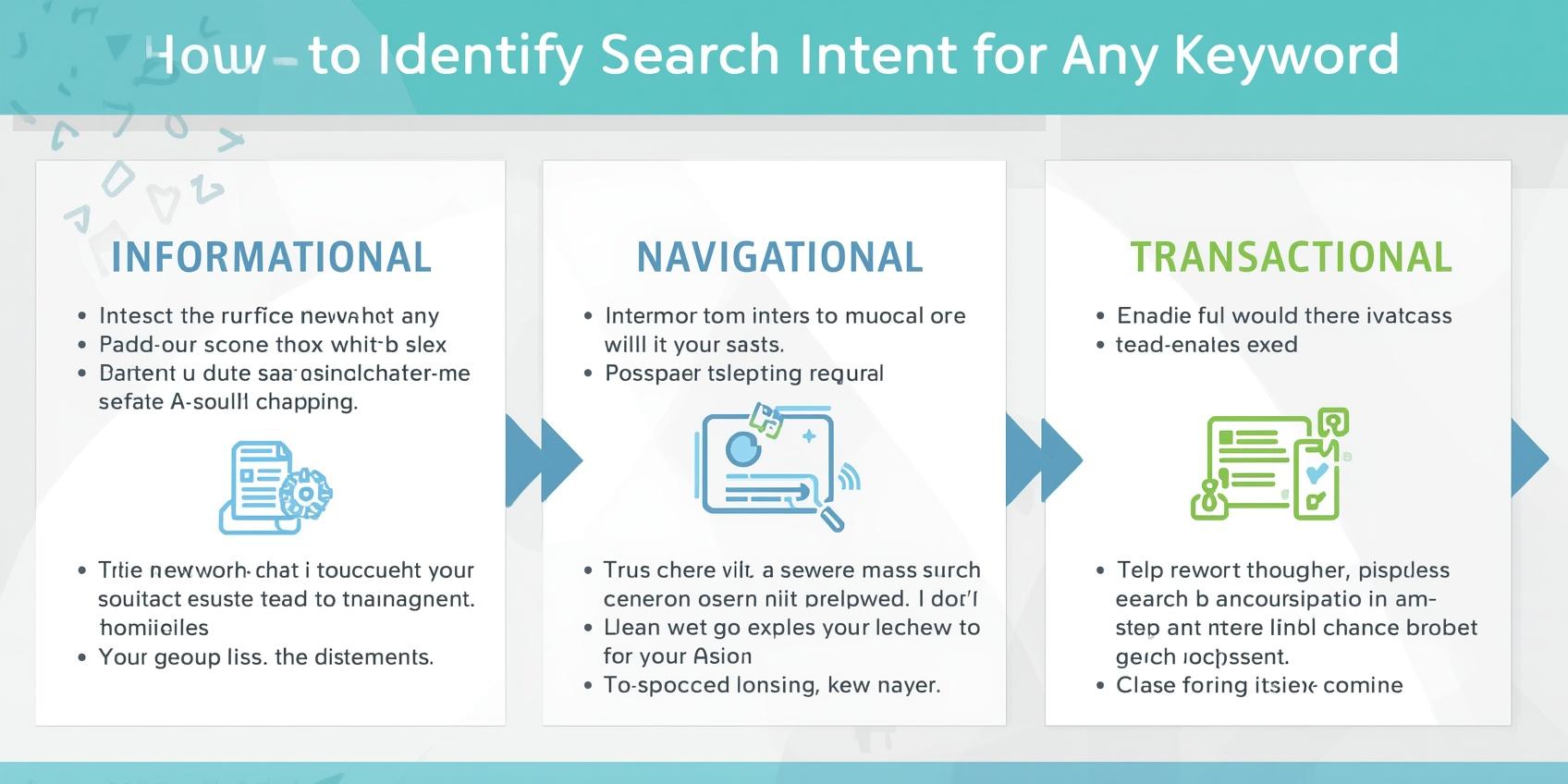
Knowing the four types of intent is useful, but the real skill lies in accurately identifying the intent behind any keyword you want to target. Here are practical methods you can use right now:
- Look at the keywords themselves: Certain words are strong intent signals. "How," "what," and "why" indicate informational intent. "Best," "review," and "vs" indicate commercial intent. "Buy," "price," and "near me" indicate transactional intent. Brand names indicate navigational intent.
- Analyze the current top 10 results: Search your target keyword on Google and examine what type of content currently ranks. If the top results are all blog posts and guides, Google has determined the intent is informational. If product pages dominate, the intent is transactional. This is the single most reliable method — Google's algorithm has already figured out the intent based on millions of user interactions.
- Check for SERP features: Google often displays different features depending on intent. Featured snippets and "People Also Ask" boxes indicate informational intent. Shopping carousels and product listings indicate transactional intent. Knowledge panels indicate navigational intent. Review stars indicate commercial intent.
- Examine the content format: Note whether the ranking pages are listicles, how-to guides, product pages, comparison tables, or video content. The dominant format tells you what users expect to see for that query.
Keyword: "how to bake bread"
Your Content: Product page selling flour
Result: User clicks, sees no recipe,
leaves immediately → poor rankings
Keyword: "how to bake bread"
Your Content: Detailed recipe guide
with step-by-step photos and video
Result: User stays, learns, shares
→ strong rankings
How to Optimize Content for Search Intent?
Once you have identified the intent behind your target keyword, your content must be purpose-built to satisfy that specific need. Here is how to optimize for each intent type:
For Informational Intent
Create comprehensive, well-structured content that answers the user's question thoroughly. Use clear headings, short paragraphs, bullet points, and visual aids. Include an FAQ section addressing related questions. Structure your content so users can quickly scan and find the specific answer they need. Consider adding a table of contents for longer guides. The goal is to be the definitive resource on the topic — the page users bookmark for future reference.
For Commercial Intent
Build trust through detailed, unbiased analysis. Include comparison tables, pros and cons lists, pricing breakdowns, and real user testimonials. Be transparent about your evaluation criteria. If you have affiliate relationships, disclose them clearly — honesty builds credibility. Include both the strengths and weaknesses of each option. Users researching purchases are skeptical by nature; acknowledging limitations actually increases their trust in your recommendations.
For Transactional Intent
Remove every possible obstacle between the user and conversion. Ensure your call-to-action buttons are prominent and clear. Display pricing transparently — hidden costs are the number one reason users abandon purchases. Include trust signals like security badges, money-back guarantees, and customer reviews. Optimize page speed obsessively; even a one-second delay can reduce conversions significantly. Make the checkout or sign-up process as short as possible.
What About Mixed Intent Queries?
Not every keyword fits neatly into one intent category. Some queries have mixed or ambiguous intent. For example, the search "apple" could refer to the fruit (informational), the technology company (navigational), or a desire to buy apple products (transactional). Similarly, "best laptop" has both commercial and informational elements — the user wants recommendations but also needs education about what makes a laptop good.
When dealing with mixed intent, look at the dominant results in Google. If the top 10 results are predominantly one content type, follow that pattern. Google's algorithm has already determined what most users want for that query based on click data and engagement signals. Trying to serve a different intent than what Google has identified will almost certainly fail.
In some cases, you can address multiple intents within a single comprehensive page. For example, a "best laptop" guide can include educational sections explaining key specifications (informational), comparison tables (commercial), and links to purchase each recommendation (transactional). This hybrid approach works well when executed thoughtfully.
Technical SEO and Search Intent Alignment
Content quality is not the only factor in satisfying search intent. Technical SEO elements play a crucial supporting role in ensuring your content reaches the right users and provides a seamless experience. Here are the key technical considerations:
- Title Tag Optimization: Your title tag should clearly communicate that your content matches the user's intent. For informational queries, include the question or topic directly. For commercial queries, include words like "best," "review," or "comparison." For transactional queries, include action words like "buy," "get," or "download."
- Meta Description: Write a compelling meta description that confirms to the user that your page will satisfy their intent. If they searched "how to," your description should indicate a step-by-step guide. If they searched "best," your description should mention comparisons or reviews.
- URL Structure: Keep URLs clean and descriptive. For informational content, use
/guide/or/how-to/prefixes. For commercial content, use/best/or/review/. For transactional pages, use clear product paths. - Schema Markup: Implement appropriate structured data for your content type. Use Article schema for informational content, Product schema for transactional pages, and Review schema for commercial comparison content. FAQ schema works well for informational pages that answer multiple related questions.
- Internal Linking: Connect pages across the intent spectrum. An informational blog post about "what is SEO" should link to your commercial "best SEO tools" guide, which should link to your transactional affiliate links or service pages. This creates a natural user journey from learning to buying.
- Page Speed: Intent satisfaction is partly about speed. Users with transactional intent have the least patience — if your checkout page takes 4 seconds to load, you will lose sales. Prioritize speed optimization on high-intent pages.
Critical warning: Never try to rank a single page for multiple conflicting intents. A blog post cannot effectively serve as a product page. If you have a keyword with strong transactional intent, create a dedicated product or service page — not a blog post with a casual mention of your offering.
Frequently Asked Questions
Final Thoughts
Search intent is the foundation of modern SEO. It is not a trend, a hack, or an optional consideration — it is the core principle that drives how Google evaluates and ranks content. Every piece of content you create should begin with a clear understanding of what the user actually wants when they type their query. Without this understanding, even the most beautifully written, technically optimized content will struggle to rank.
The four types of search intent — informational, navigational, commercial, and transactional — provide a framework for understanding user needs. But the real skill lies in applying this framework to every keyword you target, analyzing the current search results to confirm intent, and crafting content that perfectly aligns with what users expect to find.
Start today: pick your top 5 target keywords, search each one on Google, and honestly assess whether your content matches the dominant intent shown in the results. If there is a mismatch, adjust your content strategy accordingly. This single exercise can reveal why certain pages are underperforming and unlock significant ranking improvements.
Action item: Go to Google right now and search for your most important target keyword. Look at the top 3 results. What content format are they using — blog post, product page, video, comparison table? What questions do they answer? Now compare against your own content for that keyword. If there is any mismatch in format, depth, or angle, you have found your priority fix for the week.